Wednesday, October 22, 2008

How Not to Incite Victory


Listen to the new effort from Bleeding Through. They know exactly how.

Here's what they thought they'd do. Get 8 string guitars and write the same old shit they've played a hundred times because tuning it down = heavier. Look guys, that worked with the drop D grunge movement, it worked with Korn, and it worked with Meshuggah, but it worked because each had a very specific adjustment to playing style. Bleeding Through apparently only got part of the formula. I guess you could say, they need a Hiro.

YAH TAI!!!

Now look, I understand that, to a certain extent, this band is a hardcore band. So you're not going to get musical complexity in some respects. But seriously - what they've put on record is so atrocious I would highly recommend no one else ever pick up another 8 string guitar again. Save Meshuggah.

The reason why Meshuggah decided to use 8 string guitars is because they knew that the band was heading in a different musical direction. They wanted to sound more sinister. More brooding. This meant slowing down the tempo, and quitting chords in favor of writing riffs based on lines of notes. They said, hey, this eighth string plays more like a bass. So let's play it more like a bass. They went even further, by harmonizing these guitar note lines in an nearly imperceptible manner in order to give the "monotonal" sound a presence of depth. They knew that chugging chords at people with this much low end doesn't really do anything (though, in all fairness, they did attempt this with Obzen, and seemed to do it right). It's much like the backwards logic of the loudness war - everything is louder, but that doesn't necessarily equal better. Likewise, going to 8 or 9 strings, well, that would be uncivilized. You might as well play bass.

And speaking of the loudness war, the quality of sound on this record is just fucking terrible. Devin Townsend should be ashamed of himself for even being credited with this record. It simply sounds like shit. There is too much bass, nothing interesting on the vocals, and the drums are so thin and hollow it sounds like someone was just hitting paper instead of a snare and cymbals. Except for the kick drums, which are typically way too loud in the mix and, really, almost bears the quality of your average rapper's demo.

Just don't buy this fucking record. It's everything that's wrong with the scene, and in a larger sense, everything that's wrong with modern music, too.

Sunday, October 19, 2008

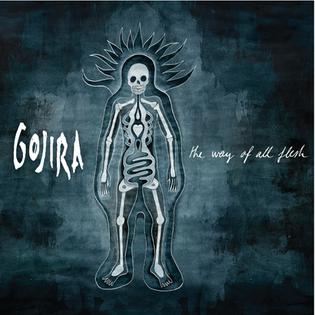
Gojira Instruct Us on The Way of All Flesh


It's surprisingly easy to call a band the future of metal and be horribly wrong. Many, many times, these bands don't live up to their next phase, shaming those of us who believe we have acute musical perception. Case in point, I once called Orgy the future of metal. You can name a one or two stinkers you committed to, too, I'm sure.

Fortunately for Gojira, this is not a symptom. Living up to their odd nom de plume, they arrived on the American scene just about two years ago out of Nowhere, France, and floored me in one roar. I screamed like a silly little girl because this French outfit was one thing many New American Wave of Metal Bands are not - interesting. From Mars to Sirius was a monster with an emphasis on massive riffage, unconventional rhythmic patterns, technical proficiency, a melodic screaming style, and wicked pig squealing, minus any superfluous solo work. This band also had something most bands don't - brothers.

Whenever you have brothers in a band it is usually a magical combination, and Joe and Mario Duplaintier are no exception. Mario shines in particular, variating and articulating his drum work with heart stopping double bass lines and hardware flourishes that add contrast to his brother's precise guitar playing, rough vocals and simple phrasing. Fellow bandmates Jean-Michel Labadie (bass) and Christian Andreu (guitar) double the power of their songwriting, providing full immersion into the enchanting soundscape of Gojira.

The Way of All Flesh continues this trend. When any artist has to follow up to a big success, it affords them two options - do something completely different and blow people's minds, or stick to the format and crunch out a flawless sequel. This latter method is exactly what Gojira chose - write heavy riffs, focus on well arranged tempo shifts without stepping too often into odd meter, and perform it all machine tight. From the big boom doom groove of Vacuity, to the campfire percussion intro in The Art of Dying, to the crushing ferocity of Adoration for None (with guest vocals served by personal endorser Randy Blythe), Gojira offer a wide range of what metal can do and be. Perhaps the riskiest cut is A Sight to Behold, featuring a digital flanger effect while Joe's vocals are spoken through a harmonized vocal distortion a la Meshuggah's Mind's Mirrors off of their Catch 33. (Whew, that was a mush!) Save a riff very similar to Meshuggah's Bleed, Gojira exhibit the influences of their contemporaries Soulfly, Fear Factory, Mastodon and Lamb of God with subtlety and panache.

Another point of intrigue is the lyrical concern of Gojira, which is unique in combining eco-consciousness, spirituality and science fiction. There is perhaps not one other band that could get away with the idea of space faring whales who save the Earth from human ignorance. Gojira pull this off once more with powerfully emotional lines, like in Toxic Garbage Island, where we share in the sheer rage Joe Duplantier feels at a "plastic bag in the sand." You are ready to believe him when he tells you that "you have the power to heal yourself" in Esoteric Surgery. We understand his struggle with human consciousness and the choice he makes to "try not to get it anymore" in the aforementioned A Sight to Behold.

Ironically, it is this very sentiment that makes it clear that Gojira does get it, and gets it better than most others.

(I still love Orgy though. Everyone has their vice!)

All Hope Is Gone. Yes. Yes it is.


But not for Slipknot. As soon as the subversive American anthem Gematria makes its vociferous entry, it is startlingly clear that this band might never fall off. It's part of the unique sonic quality Slipknot has, which dispels all calm with the sound of doom. When they say "we will burn your cities down" you better believe it.

Whether or not you like Slipknot, you should respect them. With each record this band manages to grow just enough without forgetting their essential tenets and losing their original force. Truly commendable for 9 men with serious anger issues.

And these men are angry. Joey Jordison, Chris Fehn and the delightfully violent Clown are just relentless in their percussive pyrotechnics. The hulking opening of Sulfer drives into a grinding riff that is put over the top by the brute growl and singing voice of Corey Taylor, pushed to the furthest possible edge. Equally impressive is the fiery and sporadic solo work by Mick Thompson and James Root on this song, the title track and others, like This Cold Black. Though the band has taken a step back form the experimentalism of Vol. 3, what that record did for them was enrich their existing dynamics. Ever more present is the sonic engineering of Craig Jones and Sid Wilson, from the aural quirks on Butcher's Hook to the creepy whine on the verses of Gehenna. Fill in the low end with the solid bass work of Paul Gray, and you've got a heavy palette designed to feed your metal needs.

If there is one thing Slipknot suffers from, it is from being too consistent. The brutality of the record forces the second half to pale in comparison to the first. All Hope Is Gone overdoses on highly structured song arrangement and very polished production, which has a tendency to undercut the urgency of their attack. However, thanks to this focus, Psychosocial is a perfect bite of what Slipknot is.

One thing that gives this album some sort of contrast is the inclusion of the uncharacteristic acoustic Snuff. A beautiful song, though dangerously close to becoming the soft song type this band might feel in the future that they have to go to. Dead Memories feels more Slipknot-like in this regard.

So, to sum, despite a bit of overextension on their part, overall, Slipknot compile a solid album that should be part of your catalog. Beware: may cause rioting.

Death Magnetic. That's a great title.


Chris Adler has been quoted as being part of Team Megadeth when it comes to 80s thrash. And I have to admit, I myself have definitely leaned towards Megadeth more often than not when it comes to the two of four Legends of Thrash.

Metallica will, nevertheless, always be the benchmark metal band of our time, and their success and reach cannot really be contested. First of all, metal is in their name. Second, the fact that you can refer to yourself as an old school Metallica fan only further confirms their legendary status. Third, your sister likes them. But the most fascinating thing about Metallica is that, during their heyday, they made the right move again, again and again. And then again and again. They were an unstoppable behemoth of metal, and even Mustaine admitted that they brought metal to such a high level that it was damn near impossible to catch up to them. Rust in Peace, arguably better than Justice for All, was promptly followed by The Black Album, pushing the entire metal scene to pursue minimalism in the 90s. Every single metal band was behind those guys.*

After the Black Album, not so much. And as stupid as it was, the rage directed at Metallica for cutting their hair was just physical evidence for fans that Metallica had finally fallen off, at least musically speaking. Financially, they were sound - but the live show is a completely different discussion. No fan goes to see Metallica because they don't play the old shit anymore.

So after Load, Reload and the atrocious St. Anger, what can be said about Death Magnetic?

It shreds. It grooves. It dives and bombs and devastates your ear drums.

It rocks!

Don't you dare tell anyone I said that, though. I will deny deny deny.

But seriously folks, the record starts on high, and pretty much stays there. Much of this has to do with the loudness war. The record is compressed to the max, and honestly, did anyone really need to compare the CD with the Guitar Hero version to get that impression? But what I mean is, say what you will about their steady degradation in song writing, Metallica gets points for doing the one thing they do best - compelling arrangement. They have always had this eerie ability to make a riff that, stand alone, would be hard to listen to for 8 minutes. They are experts at variating on one riff and reappropriating the same idea in different contexts so that it sounds fresh and well done every time, whether or not the song writing is decent. Suicide & Redemption, while unimpressive as an instrumental for technical precision, is a great example of this, and even more so because the technical stuff is toned down.

I'm not going to say there aren't any lame tunes on this record. When it comes to songs, it's clear Megadeth is better at pulling the heart strings. The Day That Never Comes is sappy and really corny. Unforgiven III is the second song to reduce the greatness of the original, and proves that Metallica should just never use any instruments other than guitar, bass and drums. (Screw S&M. \m/) But Cyanide, Judas Kiss and All Nightmare Long put the cock back in rock, if you don't mind me saying so. And that's what this record tried to do. Did it succeed? Not totally. But it did kill T.I. which is quite an accomplishment. Even that dude is behind Metallica. And when it comes right down to it, people still love metal and still love Metallica.


*Right now, though, the position of innovator belongs to
Meshuggah, who is so far ahead of the genre, however, that they have moved nearly outside of it.

Friday, September 12, 2008

iTunes is Dead.


Do yourself a favor.

DO NOT DOWNLOAD iTUNES 8. Why?

The Genius Sidebar. Apple has taken what was quite possibly the best free program on the net, and google-fied it. And not in a fun way. Then it applied to its newest not-new functionality the most overused word of our generation. Yes, you can hide it of course, but the idea is that it's there to make playlists for you based on what you're listening to (which almost never works in any form I've seen it) and then suggest things for you to buy. Surprise! You are no longer an informed, thinking or even self sufficient customer. You are a consumer.

Quite possibly the most depressing thing is that the newest view they've come up with is just a souped up version of an old fiend you know very well, from back in the old days when you had no choice but to use it, and which now appears to be reborn in a 12th edition developed by its competitor:

Windows Media Player. Thou glorious handle suffocates our throat.

Artist/Album thumbnails?? Yes, perhaps Apple is being aggressive, perhaps it's decided that the only way to convert the lumbering masses still not paying tribute to its ripe fruitiness is to bait them with adventures a la Beowulf. Insert thou doctrine along familiar lines and indoctrinate. But, unfortunately, it's made an independent user like me flee to a mountain in Norway to reassert my Viking roots.

Apple, this upside down cross is for you.

Sunday, August 10, 2008

Radiohead. Live. All Points West. Incroyable!

There's really not much that I can say about the show. The weather was perfect. The location? Who knew jersey could be that gorgeous! The sound - by far the best live sound I've ever experienced at any show, any where, period(.) This was as close to record a live band has ever got. Outdoors, to boot.

And the performance was exceptional. The band is known for being eclectic even with their own material, and the song selection reflected that - a mix of In Rainbows (in full) and a shuffle of all their cuts from their entire career as random as iTunes with a full blown LED visualizer, which was something that you probably can only appreciate live. Sure, there may be a DVD, but honestly, you should have been there.

The stage was set with three large LED screens, one on either side of the stage, a longer one behind the band. There were six camera shots, the ones behind set dead even, the side screens' frames set just a bit off center for artistic effect. Surrounding the band were a hundred or so LED poles that acted as a filtered screen superimposed over the camera work in the back. You couldn't tell if it was a prison or a crystal palace. Matching moveable flood lights in groups of five in between and one large bar at top added sci fi vibes a la Close Encounters, another low wall of light behind the band at the base of the screen in the back. Loud colors infecting it all, shapes that flowed, jittered, jived, rotated, hyperblinked, the light show in itself was quite a triumph. Every song had its own clever design: The National Anthem started with a simple double frequency line that blazed and exploded over ever distorting camera shots; hypnotizing greens streamed down the stage during the close of Sit Down, Stand Up; an alternating wash of black and white into TV screen rainbow of the closing Idioteque left us all feeling fitter, happier.

Despite the lights and the visualizer aesthetic, the songs didn’t flow into each other, each piece left to resonate in our brains before the next number. There were some great human moments, too. Yorke stayed off the mic except for a few words here and there during set up flops, like “be right with you” while setting up a kid’s drumset for Bangers & Mash and an earnest “I meant to do that” when they had to start Videotape over after Yorke botched the timing of the piano. But the best line of the night was during the dedication of Airbag to Kings of Leon: “If we were as good looking as them, we'd be famous.”

Saturday, August 9, 2008

One Day as Lion. Deliciously Indie.

This is not a super group – it’s an ultra dynamic duo akin to Batman and Robin, with roles reversed. Zack de la Rocha leads, nimble and limber, skippin’ and swingin’ like Cassius upon the fascists. Jon Theodore brings out his full utility belt, an even handed arsenal of late day Neil Peart and John Bonham bombastics. Trading the sonic tricks they learned from soundmasters Tom Morello and Omar Rodriguez-Lopez, respectively, Mario C mans the cave, producing a record that is crisp and abrasive, with well timed space whirls and cutting samples.

Though only an EP, it’s clear that potential is here. De la Rocha’s electric eclectic rhyme style shows no rust, coming through distorted and reverbed as if the one day is here and now. Lyrically, Zack’s attack is as sharp as ever and pulls no political punches, advising the inactive that “if you fear dying than you’re already dead.” Adding to the mathematics of the outfit, he merges fierce screams with punk vocals, rasta rasp and his newest weapon of choice, the keyboard. With the wash of frequency you’d guess it was guitar, but de la Rocha keeps it chord free, birthing what could be called “punk hop” – one note lines and intervals, with the left hand on bass and the right on melody. While his playing skill sometimes comes off as kids stuff, credit is due for a man who can do this much with what seems the barest effort.

Will One Day have the mainstream success of Rage, or Audioslave? Perhaps not. Most Rage fans are over their own faux activism, and considering the content and delivery, de la Rocha and Theodore might be more satisfied on the indie side. Bottom line: One Day as a Lion is clever noise band duo whose simple and rugged attack matches in subtle eloquence.

Thursday, July 31, 2008

Soulfly Conquers with 6th Effort

Soulfly has a musical revelation exactly every two records, the second being an extension of the first.

In the beginning there was Soulfly, the natural musical progression from the Sepultura down-tuned groove epic Roots. Then, Max Cavalera made it more Primitive, emphasizing big crowd bounce and cleaner production. With 3, Soulfly shed its NuMetal past, infusing rougher grooves and brutal thrash riffs with more tribal instrumentation, giving their music a brooding and inspiring edge.

Finally, the Prophecy was uttered, and Max’s vision for 3 was mastered. By recruiting Ill Nino’s former flesh searing soloist Marc Rizzo, Max solidified Soulfly's sound. His flamenco influences and hyper-stylo added a spice you didn't know was missing. As a record it is their most balanced to date: groove, thrash, brutality, reggae, latin jazz, flamenco, epic movie soundtrack transitions - the potential soundscape and tremendous range of Soulfly is best showcased here.

Enter the Dark Ages, by far their thrashiest and most experimental phase. Max travelled the world collecting music, carefully orchestrating pieces in order to emphasize a darker intent through creepy sonic passages. Meanwhile, he allowed Marc Rizzo free reign over some of Soulfly’s tightest and heaviest material. But although the direction was right, it still came across as somewhat inconsistent.

Conquer is the equalizer in a sense, variating in musical direction by cycling through thrash, groove and tribal from measure to measure, laced with wicked sonic effects and brilliant solo work courtesy of Mr. Rizzo. Cavalera Conspiracy is definitely an influence here, too, as nearly every track achieves breakneck speed and exhibits tight structure. The songs are perhaps their most progressive, complex and complete to date. “For Those About To Rot” is a classic example in that sense, the title of which also featuring the dead serious phrase play Max is known for.

Now, granted, this record is much more vibrant than CC's Inflikted, but some of the riffage is not as fresh as previous Soulfly efforts, and might require a few listens to catch the subtleties blinded by the inattention caused by familiarity. Nonetheless, Max believes a band should both have its givens and be organic. And as a man who knows how to satisfy his fans, there are certain tracks you just know you're going to get with a Soulfly record: epic introductory, second track single, a nailbomb style headbanger somewhere in the middle, and a spiritual Soulfly number towards the end, not to mention guest vocalists (David Vincent from Morbid Angel on "Blood Fire War Hate"; Dave Peters from Throwdown on "Unleash"). But Max and co. still have an ace or two, or three or four – the headspinning groove of “Rough”, the gloom and doom of “Touching the Void”, and the musically and technically excellent “Fall of the Cycophants”. As with all Soulfly records, the momentum builds as it goes, each track stronger than the last, ending on the truly beautiful “Soulfly VI”.

On "Rough" Max tells us, “it’s how you live, not how you fall,” and Conquer is a full package of Soulfly that delivers on that line – despite some missteps, the record shows that Soulfly is still strong, full of life, and ready for the next phase.

Tuesday, July 29, 2008

Scars on Broadway...fun but unmemorable.

Here's the thing: This is not a new band, this is the same old Daron Malakian. And when an artist does a solo project, or forms a new band, there's always a sense of danger mixed with excitement.

Why? For the most part, solo records tend to
be wildly unsuccessful. The purpose of a solo effort is to establish a confirming document that you are the genius you claim to be. Fact of the matter is that, unless you start solo, this is most likely not true, and the results can be crushing. There's also the hype factor, or what I like to call the George Lucas factor. You can be as gentle a dictator as you want, but when it comes right down to it, you won't hire a gun that will challenge you. And that's the first mistake, because much of the band dynamic feeds off of that. Some bands enjoy it, others hate it, but if it works it usually don't need fixin.

Case in point: I love the guy, but Daron Malakian is not a musical genius. He's a really spaced out Armenian cowboy who likes anything over the top. Big power chords. Fast and aggressive rhythmic attack. Soaring vocals. Absolut quirk. A lot of this is on the record, and a lot of it is fun, but a lot of it is empty. Admittedly, he's never been the type to be deep outright. There's no lyrical conspiracy here, nor musical complexity. The record is a lot of fun, though. And simplicity works, but making something complex that sounds simple is what writes the greatest songs. Daron's had too much fun and ends up with something so simplistic that its most brilliant moments, from lyrics to melody to soundscape, will fall from memory within a week.

In fact, if your memory serves you right, you could probably get more worth out of the neat exercise of picking out which riff, melody or chord progression (hell, even track sequence) comes from which System record.

As a rule of thumb, going the way your band already went is always a bad idea because without challenging yourself, or having someone there to challenge you (and it is hard to prove Dolomayan wasn't more than another hired gun) inevitably it will be conventional. Doubly bad when you're one of the least conventional bands in your time. Yes, part of you will always be that band, but Daron is not even slightly original to himself, and despite calling it an evolution of his sound, it comes off as denatured. This is true with Serj's solo effort as well, and what's clear when listening to the two is that the magic of System of a Down comes from a group effort. The fact is, both solo records are weak versions of what makes these talents stronger together. The genius is communal.


If you're a System freak that just can't get enough, go for it. Otherwise, skip it.

Saturday, June 7, 2008

Welcome to my blog - of DEATH!

Okay, I'm kind of just doing this to see how my blog looks, so here you are.

Gonna try and put up reviews of records of stuff I listen to, perhaps other things as well, but I'd rather not bore you with my personal life. I mean, this blog is pretty boring already.

Cheers!