It's surprisingly easy to call a band the future of metal and be horribly wrong. Many, many times, these bands don't live up to their next phase, shaming those of us who believe we have acute musical perception. Case in point, I once called Orgy the future of metal. You can name a one or two stinkers you committed to, too, I'm sure.
Fortunately for Gojira, this is not a symptom. Living up to their odd nom de plume, they arrived on the American scene just about two years ago out of Nowhere, France, and floored me in one roar. I screamed like a silly little girl because this French outfit was one thing many New American Wave of Metal Bands are not - interesting. From Mars to Sirius was a monster with an emphasis on massive riffage, unconventional rhythmic patterns, technical proficiency, a melodic screaming style, and wicked pig squealing, minus any superfluous solo work. This band also had something most bands don't - brothers.
Whenever you have brothers in a band it is usually a magical combination, and Joe and Mario Duplaintier are no exception. Mario shines in particular, variating and articulating his drum work with heart stopping double bass lines and hardware flourishes that add contrast to his brother's precise guitar playing, rough vocals and simple phrasing. Fellow bandmates Jean-Michel Labadie (bass) and Christian Andreu (guitar) double the power of their songwriting, providing full immersion into the enchanting soundscape of Gojira.
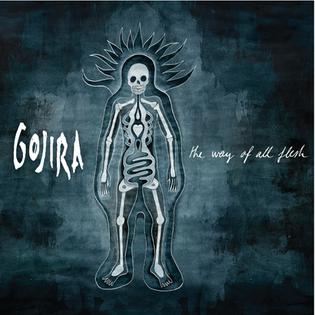
The Way of All Flesh continues this trend. When any artist has to follow up to a big success, it affords them two options - do something completely different and blow people's minds, or stick to the format and crun
 ch out a flawless sequel. This latter method is exactly what Gojira chose - write heavy riffs, focus on well arranged tempo shifts without stepping too often into odd meter, and perform it all machine tight. From the big boom doom groove of Vacuity, to the campfire percussion intro in The Art of Dying, to the crushing ferocity of Adoration for None (with guest vocals served by personal endorser Randy Blythe), Gojira offer a wide range of what metal can do and be. Perhaps the riskiest cut is A Sight to Behold, featuring a digital flanger effect while Joe's vocals are spoken through a harmonized vocal distortion a la Meshuggah's Mind's Mirrors off of their Catch 33. (Whew, that was a mush!) Save a riff very similar to Meshuggah's Bleed, Gojira exhibit the influences of their contemporaries Soulfly, Fear Factory, Mastodon and Lamb of God with subtlety and panache.
Another point of intrigue is the lyrical concern of Gojira, which is unique in combining eco-consciousness, spirituality and science fiction. There is perhaps not one other band that could get away with the idea of space faring whales who save the Earth from human ignorance. Gojira pull this off once more with powerfully emotional lines, like in Toxic Garbage Island, where we share in the sheer rage Joe Duplantier feels at a "plastic bag in the sand." You are ready to believe him when he tells you that "you have the power to heal yourself" in Esoteric Surgery. We understand his struggle with human consciousness and the choice he makes to "try not to get it anymore" in the aforementioned A Sight to Behold.
Ironically, it is this very sentiment that makes it clear that Gojira does get it, and gets it better than most others.
(I still love Orgy though. Everyone has their vice!)


 Posts
Posts


2 comments:
I came across your blog and I would like to suggest Opeth. Also Porcupine Tree.
Notable bands indeed.
Orslan Osp Nomansson.
Sorry for the late reply! And, yes, yes, I agree.
Post a Comment